
Cosmetic Cyst Removal Surgery
Expert surgical removal with minimal scarring – handled in a single visit.

At a Glance
Cyst removal surgery is a dermatological procedure to surgically excise benign cysts from beneath the skin. Epidermoid cysts (commonly called sebaceous cysts) are keratin-filled sacs that form when hair follicles become blocked. Board-certified dermatologists commonly perform conventional surgical excision to remove the entire cyst wall and prevent recurrence, but may also perform minimal excision as an alternative method to remove the entire cyst.
- Epidermoid cysts are benign, keratin-filled nodules that form when the epidermis gets trapped beneath the skin surface[4]
- Complete removal of the cyst wall is important to prevent recurrence[5]
- Excision during active inflammation increases recurrence risk; a minimum 8-week waiting period is recommended after the inflammation resolves[5]
Before & After Results
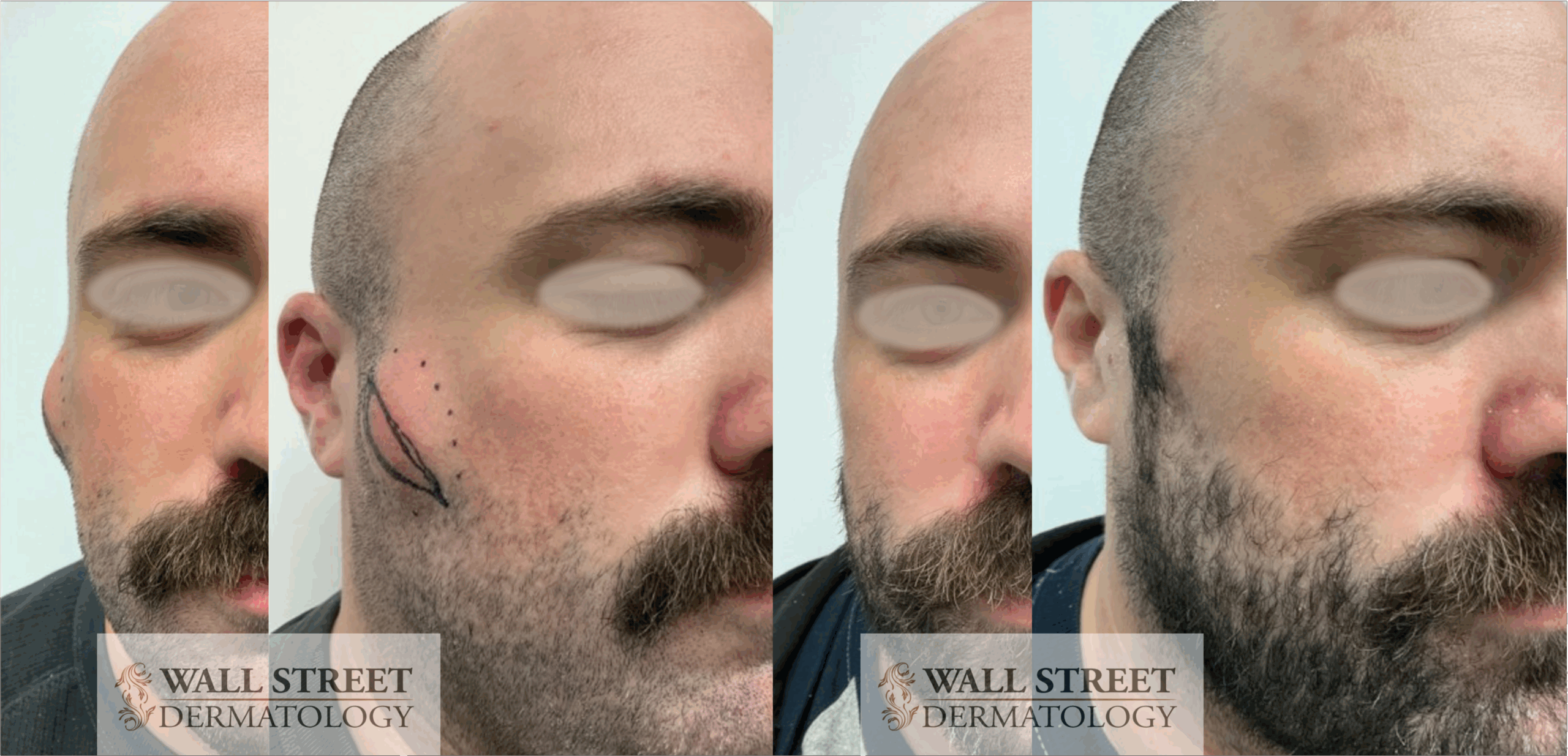
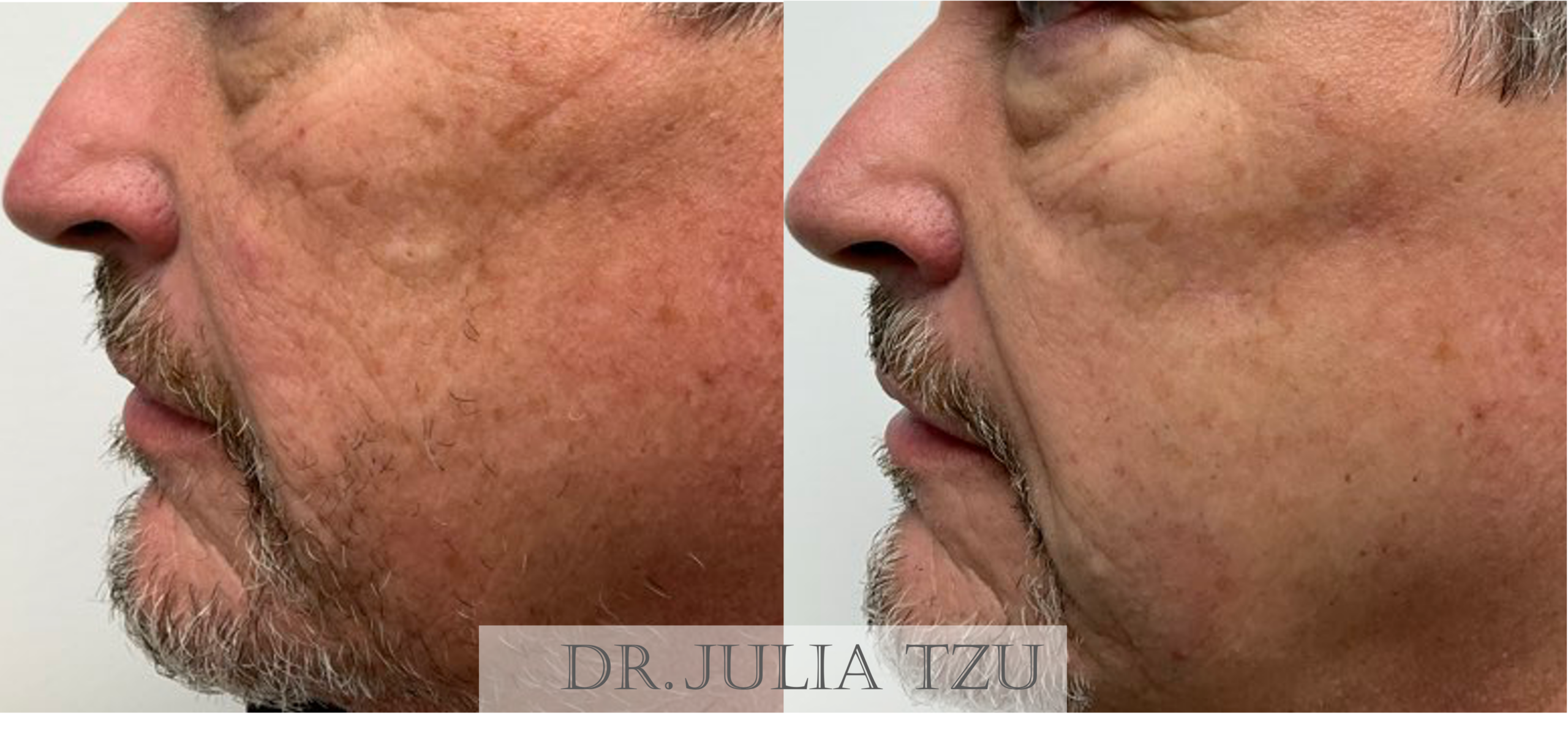

Overview
Epidermoid cysts are benign, encapsulated nodules that develop beneath the skin when keratin collects within a sac-like structure. Although commonly called sebaceous cysts, they do not involve the sebaceous glands. They appear most often on the face, neck, and trunk, but can develop anywhere on the body.
Cyst removal is typically an outpatient procedure performed under local anesthesia. The appropriate technique depends on the cyst’s size and location. For optimal removal, the cyst must not be actively or recently inflamed because removing the entire cyst wall is essential to prevent recurrence.
When performed by an experienced board-certified dermatologist, cyst removal can produce excellent results with minimal scarring. Modern minimally invasive techniques use smaller incisions, improving cosmetic results while maintaining low recurrence rates.
Benign cysts without symptoms do not require surgery, but many patients choose removal because of their appearance. At Wall Street Dermatology, Dr. Tzu examines the cyst and recommends the surgical method suited to its size, location, and condition, with the aim of optimizing the cosmetic result.
Why Choose Dr. Julia Tzu for Cosmetic Cyst Removal Surgery
- Triple board-certified dermatologist with 15+ years of experience
- Minimally invasive techniques that prioritize cosmetic outcomes
- Complete excision to minimize recurrence risk
- Same-day procedure with minimal downtime
- Convenient Financial District location
What to Expect During Treatment
- 1Initial consultation includes examination of the cyst, discussion of symptoms and history of any previous inflammation or drainage, and review of medical history.
- 2The cyst's characteristics are evaluated to determine the most appropriate removal technique based on size, location, and condition.
- 3If the cyst is currently inflamed or infected, antibiotics and/or drainage may be recommended first, with excision scheduled at least 8 weeks later.
- 4The treatment area is cleaned with antiseptic solution and marked to guide the procedure.
- 5Local anesthetic (lidocaine with epinephrine) is injected around the cyst, avoiding injection into the cyst itself to prevent rupture.
- 6The surgeon makes an incision appropriate to the chosen technique (elliptical for conventional, small punch for minimal excision).
- 7The cyst is carefully dissected from surrounding tissue, with the goal of removing the entire cyst wall intact.
- 8The wound bed is examined to ensure complete removal of cyst contents and wall fragments.
- 9The incision is closed with sutures. Smaller incisions may be left to heal by secondary intention or closed with adhesive strips.
- 10A sterile dressing is applied, and detailed aftercare instructions are provided.
Conditions We Treat
Cosmetic Cyst Removal Surgery can help address the following conditions:
How does Cosmetic Cyst Removal Surgery work?
- Conventional surgical excision begins with an elliptical incision around the cyst. The cyst wall is then separated from the surrounding tissue through a combination of sharp and blunt dissection. The aim is to remove the sac intact without rupturing it. A scar-minimizing variation places the incision lines within the outline of the cyst before the wall is carefully dissected from the surrounding tissue.
- Minimal excision uses a 2–3 mm incision. The cyst contents are expressed through the opening by compression, and the cyst wall is then extracted through the same incision. This technique creates a smaller scar and is more effective for smaller cysts. Its use depends on whether the entire sac wall can be reached and removed through the opening, which is not always possible.
- If the cyst ruptures during removal, the surgical site is thoroughly cleansed and any remaining fragments of the cyst wall are removed to minimize the risk of recurrence.
- The wound is closed with sutures placed to minimize tension and optimize healing. The smaller incision used for minimal excision may or may not require sutures.
When It's Recommended
- Cyst causing cosmetic concerns due to visible bump or swelling
- Recurrent inflammation or tenderness at the cyst site
- Cyst interfering with daily activities or causing discomfort
- Cyst that is enlarging over time
- Patient preference for definitive removal to prevent future episodes
Interested in cosmetic cyst removal surgery? Our team is here to help.
Recovery & Aftercare
- Initial healing typically occurs within 1-2 weeks
- Sutures are usually removed within 7-10 days, depending on location
- Avoid contact sports and strenuous activity during the initial healing period
- The surgical scar reaches maximum tensile strength (about 80% of normal skin) at approximately 8 weeks
- Most patients can return to normal activities within a day or two of the procedure
- Final scar appearance continues to improve over 6-12 months
- Sun protection is recommended during healing to prevent hyperpigmentation
Alternative Treatments
- Observation without treatment for asymptomatic cysts
- Incision and drainage for inflamed or infected cysts (temporary relief, does not prevent recurrence)
- Corticosteroid injection to reduce inflammation before planned excision
- Laser-assisted minimally invasive excision for select cysts
Frequently Asked Questions
Should I see a dermatologist or a general surgeon for cyst removal?
What is cyst removal?
Does cyst removal hurt?
Is cyst removal safe?
Can a cyst come back after removal?
How long does cyst removal take to heal?
What is the difference between draining and removing a cyst?
How do I care for the wound after cyst removal?
How much does cyst removal surgery cost?
What is the difference between a cyst and a lipoma?
Will cyst removal leave a scar?
Can a cyst be removed while it is inflamed?
Who is a good candidate for cosmetic cyst removal?
Where on the body can cysts be removed?
What are the risks of Cosmetic Cyst Removal Surgery?
When to Avoid
- Active infection or inflammation at the cyst site (wait at least 8 weeks after the inflammation resolves)
- Bleeding disorders or anticoagulation therapy without medical clearance
- Known allergy to local anesthetics
- Cyst characteristics concerning for malignancy (requires biopsy evaluation)
- Unrealistic expectations about scarring outcomes
Possible Risks
- Scarring, which varies based on technique, cyst size, and location
- Cyst recurrence if wall fragments remain (minimized with complete excision)
- Infection at the surgical site, though rare with proper wound care
- Bleeding or hematoma formation
- Temporary numbness or altered sensation near the incision
- Hyperpigmentation or hypopigmentation at the treatment site
- Keloid or hypertrophic scarring in predisposed individuals
- Allergic reaction to local anesthetic (rare)
Cosmetic Cyst Removal Surgery Cost
Cosmetic Cyst Removal Surgery at Wall Street Dermatology $2,000-$3,500.
Schedule a consultation to discuss your specific needs and receive a personalized treatment plan.
Visit Our New York Office
Wall Street Dermatology is conveniently located at 65 Broadway, Suite 904, New York, NY 10006.
We serve patients from Financial District, Manhattan, Lower Manhattan, Manhattan, New Jersey, Brooklyn, Queens, Staten Island.
Ready to Get Started?
Interested in cosmetic cyst removal surgery? Our team is here to help.
Sources & References
This article draws from 5 peer-reviewed sources.
Government & Research
Medical Institutions
Medically reviewed by Dr. Julia Tzu, MD, FAAD, FACMS · Last reviewed: 2026-08-31