
Mole Removal in NYC: Minimal Scarring & Maximum Precision
Triple board-certified dermatologist specializing in scar minimizing cosmetic mole removal, with 10,000+ mole removals personally performed in an exclusive Manhattan private practice setting.

Dr. Julia Tzu is a triple board-certified dermatologic surgeon with over 15 years of experience, specializing in scar minimizing cosmetic mole removal. Educated at Stanford University and Johns Hopkins School of Medicine, with advanced surgical training at University of Pennsylvania and dermatopathology fellowship training at NYU. Over 10,000 cosmetic mole removals performed.
Trained at




- Stanford University (Phi Beta Kappa, Highest Honors)
- Johns Hopkins School of Medicine (MD)
- Fellowship in Procedural Dermatology, University of Pennsylvania
- Fellowship in Dermatopathology, NYU Langone Medical Center
- Clinical Assistant Professor of Dermatology, NYU
- 10,000+mole removal procedures performed
- 1000+five-star reviews across Google, Zocdoc, and Yelp
- Castle Connolly Top Doctorsince 2015
Before & After Results
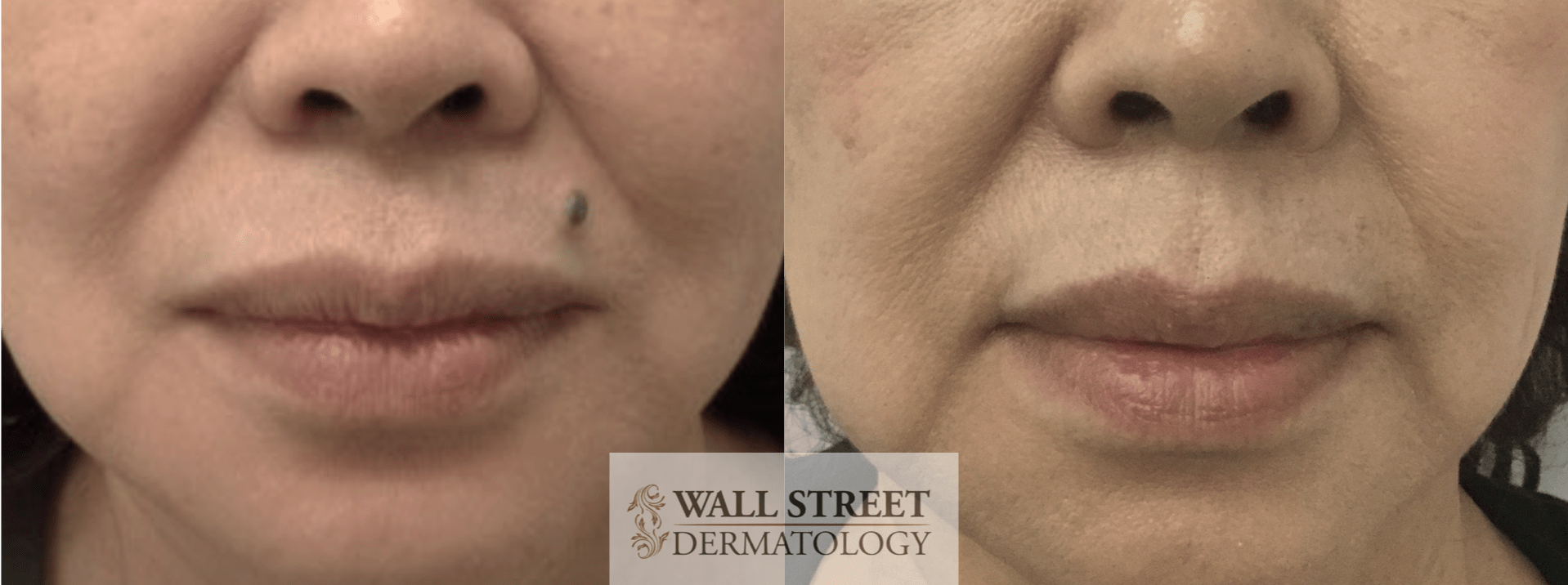
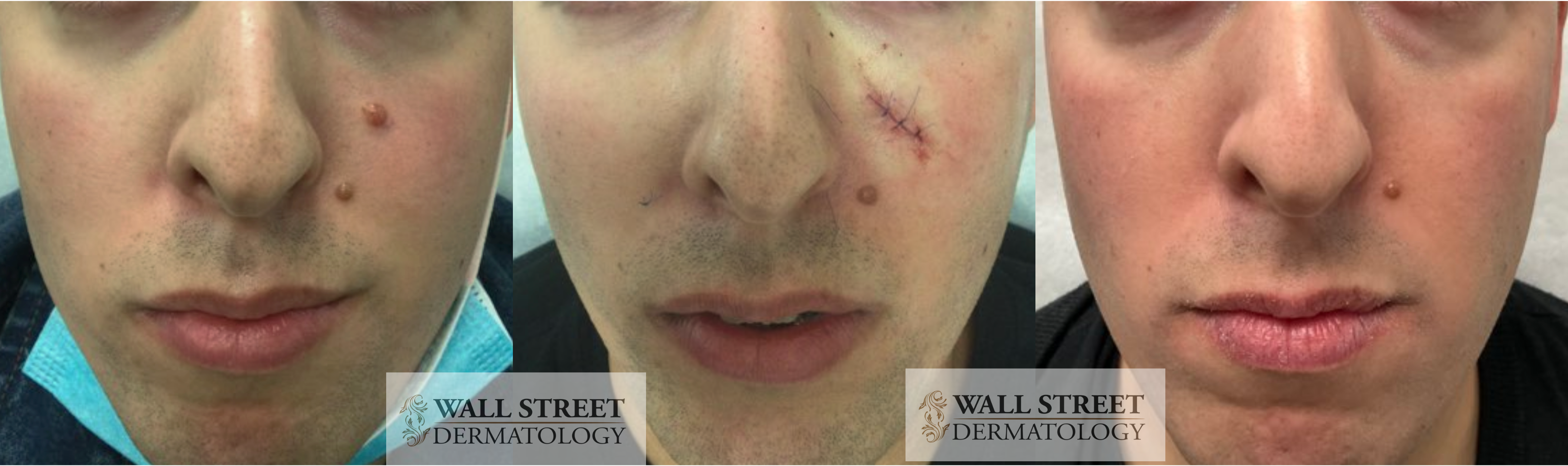
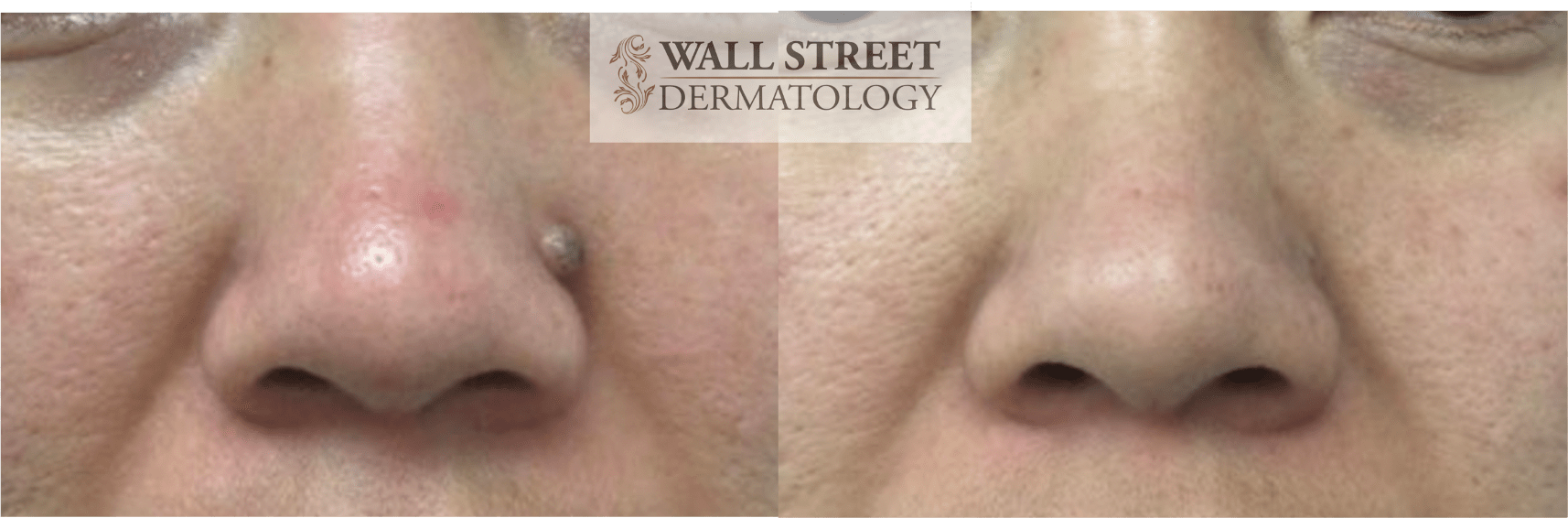
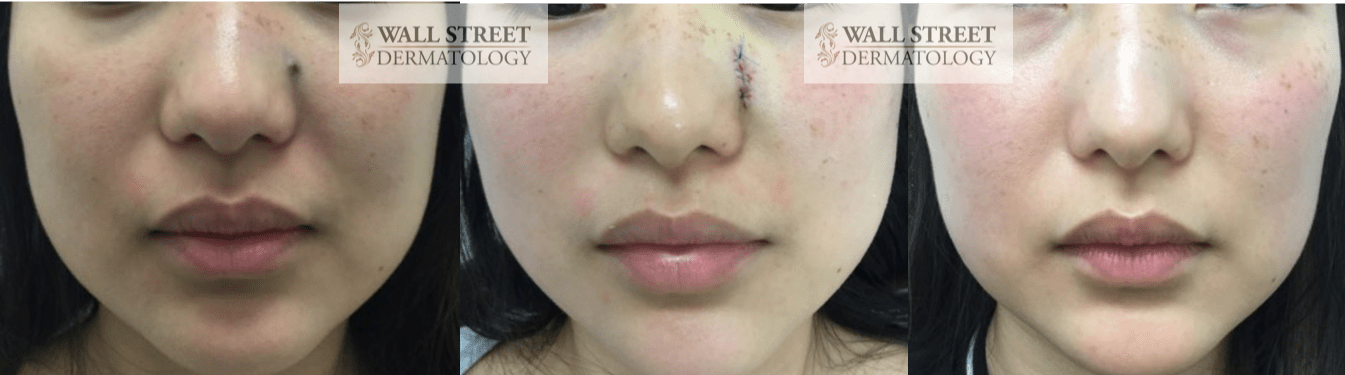
Interested in cosmetic mole removal? Our team is here to help.
Why Choose Dr. Julia Tzu for Cosmetic Mole Removal
"Cosmetic mole removal is one of my favorite procedures because of how satisfying its outcome can be to patients who have waited too long to remove an unsightly mole. Mole removal can be performed via a variety of modalities, and I always seek to find the least invasive option to provide the best cosmetic outcome. However, even when the only option is surgery, mole removal can still result in imperceptible scarring because of special surgical techniques and equipment I utilize."
– Dr. Julia Tzu, MD, FAAD, FACMS
Dr. Julia Tzu is known for delivering exceptionally natural, scar-minimizing results through her specialized cosmetic and surgical techniques.
- Triple board-certified dermatologic surgeon with extensive experience in cosmetic mole removal
- Meticulous approach that prioritizes the least invasive, most aesthetic method
- Advanced surgical techniques that help achieve virtually imperceptible scars
- Over 10,000 successful mole removals performed with precision and an artistic eye
What Is Cosmetic Mole Removal?
Cosmetic mole removal refers to the safe, aesthetic-focused removal of moles that are harmless but bothersome, raised, or cosmetically distracting. This treatment is performed purely to improve appearance – not because of medical concern. Dr. Julia Tzu is widely recognized for her precision and cosmetic artistry, making her one of NYC's go-to specialists for beautiful, scar-minimizing mole removal.
Cosmetic mole removal is typically performed as an outpatient procedure under local anesthesia. The choice of removal technique depends on the mole's size, depth, location, and the patient's cosmetic goals.
When performed by an experienced board-certified dermatologist, cosmetic mole removal can achieve excellent aesthetic outcomes. Modern techniques focus on scar minimization through precise incision planning, meticulous wound closure, and comprehensive aftercare protocols.
All removed tissue is typically sent for histopathological examination to confirm the mole is benign, even when removal is performed for cosmetic purposes. This provides an important safety check and peace of mind for patients.
At a Glance
| Procedure time | 15-30 minutes per mole |
|---|---|
| Anesthesia | Local anesthesia (numbing injection) |
| Recovery | Most patients return to normal activities the same day |
| Methods | Shave excision, surgical excision, or laser removal depending on mole type |
| Pathology | The AAD recommends all removed moles be sent for laboratory analysis to rule out melanoma |
| Performed by | Dr. Julia Tzu, a triple board-certified dermatologic surgeon at Wall Street Dermatology in Manhattan's Financial District, who has personally performed over 10,000 cosmetic mole removals |
| Fellowship-trained in both surgery and pathology | Dr. Tzu completed fellowships in procedural dermatology at the University of Pennsylvania and in dermatopathology at NYU Langone, so the same physician plans the excision, closes it, and reads the tissue afterward |
How Is Cosmetic Mole Removal Performed?
Cosmetic mole removal is performed using advanced techniques, including shave removal, surgical excision, and laser treatment. The most appropriate approach is determined by the mole's depth, size, color, and location, as well as skin type – each carefully evaluated by Dr. Tzu, a triple board-certified dermatologic surgeon in Manhattan NYC. Personal preferences, schedule, and daily routine are also thoughtfully considered to ensure a precise, individualized treatment plan.
Surgical Shave Removal
- Quick, minimally invasive; usually takes about 5 minutes under local anesthesia
- Sculpts the mole to match surrounding skin with no stitches required, often producing minimal scarring
- Best for small, superficial, or slightly raised moles
- Simple recovery, but higher chance of recurrence if the mole extends more deeply
Surgical Excision
- Used for larger or deeper moles, including compound or intradermal nevi
- Removes the mole down to the subcutaneous layer for complete excision
- Area is closed with bilayered sutures; healing usually takes 1 to 2 weeks with daily dressing changes
- More involved than a shave, but lower risk of recurrence
Laser Mole Removal
- Uses targeted light to break down superficial, non-cancerous moles
- Ideal for small, lighter-colored moles on most areas of the body
- Requires strict sun protection afterward to prevent hyperpigmentation
- A dermatologist must confirm the mole is benign, not appropriate for suspicious or potentially cancerous lesions
Types of Moles We Remove
- Raised Moles
- These sit above the surface of the skin and can catch on clothing or jewelry. They are usually smooth and rounded, and many people remove them for comfort or appearance.
- Flat Moles
- These lie even with the skin and can vary in color from light to dark brown. They are often removed when they become more noticeable or change over time.
- Flesh-Colored Moles
- These match skin tone and look like small bumps. They are benign but may be removed if they bother you or affect how you feel about your skin.
- Large, Patch-Like Moles
- These appear as broader areas of pigment with edges that are not perfectly uniform. Removal is common when the spot is prominent or difficult to conceal.
- Sun-Responsive Moles
- These tend to darken with sun exposure and shift in visibility throughout the year. Many patients choose removal because of their changing appearance.
- Skin Tags
- These small, soft growths commonly appear on the neck, underarms, chest, or groin. While harmless, they can snag on clothing or jewelry, and many patients remove them for comfort or a smoother appearance.
What Is the Difference Between Cosmetic and Medical Mole Removal?
Cosmetic mole removal focuses on improving appearance – treating moles that are harmless but distracting, raised, or located in areas you simply do not love. Medical mole removal, on the other hand, is performed when a mole shows signs of change or concern and needs to be evaluated or removed for your health. While most moles are benign, any mole that changes in size, color, shape, or behavior should be evaluated by a board-certified dermatologist.
At Wall Street Dermatology, Dr. Tzu evaluates each mole individually to determine which category applies and the most appropriate approach.
What to Expect During Your Mole Removal
- 1The mole removal begins with a consultation to assess the mole's size, depth, and location. Dr. Julia Tzu determines the best method for removal and explains the safe, scar-minimizing procedure in detail.
- 2Local anesthesia numbs the area to ensure a painless experience. Once the area is numb, Dr. Tzu proceeds with the most appropriate removal method.
- 3If the mole is raised, Dr. Tzu may perform a shave removal, using a surgical blade to gently level it with the surrounding skin.
- 4For deeper or flat moles, Dr. Tzu performs a surgical excision, carefully cutting out the mole along with a small margin of surrounding tissue and then closing the area with fine sutures to promote optimal healing.
- 5If the mole is small, lighter colored, and superficial, laser removal may be used, targeting pigmentation without cutting the skin.
- 6After the procedure, Dr. Tzu provides detailed aftercare instructions to minimize scarring and ensure smooth healing. Follow-up visits may be scheduled to monitor results. Her expertise in cosmetic dermatology ensures your skin heals beautifully with the most natural-looking outcome.
Recovery & Aftercare
- Most patients experience quick recovery, often returning to their daily routine immediately following a procedure
- Vaseline or bacitracin ointment and a bandage is applied over the treated site for 7 to 14 days during the initial healing phase
- For surgical excision, stitches are removed one to two weeks later and exercise should be avoided for two weeks after surgery
- Most patients return to normal activities immediately – avoid contact sports until healed
- The area may appear red or pink for several weeks
- Final scar appearance develops over 6 to 12 months as tissue remodels
- Sun protection is essential during healing to prevent hyperpigmentation
- Scar treatment options (silicone sheets, laser) may be considered after initial healing
Frequently Asked Questions
Does mole removal leave a scar?
Is mole removal painful?
How long does it take for a mole removal to heal?
Can moles grow back after removal?
What is the difference between shave removal and surgical excision?
How do I care for the wound after mole removal?
How much does cosmetic mole removal cost in NYC?
Is cosmetic mole removal covered by insurance?
Should I see a dermatologist or plastic surgeon for mole removal?
Can mole removal cause nerve damage?
Who is a good candidate for cosmetic mole removal?
How long does a mole removal procedure take?
Can flat moles be removed without a visible scar?
How do I book a mole removal consultation?
Areas We Serve Throughout NYC
Wall Street Dermatology serves patients from across the New York City metro area:
- Manhattan
- Financial District, Upper East Side, Upper West Side, Midtown, Chelsea, SoHo, Tribeca
- Brooklyn
- Brooklyn Heights, Williamsburg, Park Slope, DUMBO
- Queens
- Long Island City, Astoria, Forest Hills
- The Bronx
- Riverdale, Pelham Bay
- Staten Island
- St. George, Tottenville
- New Jersey
- Hoboken, Jersey City
Schedule Your Mole Removal Consultation
Have questions about mole removal? Dr. Tzu is here to help.