
Mohs Surgery NYC: Minimally Invasive Skin Cancer Treatment
A precise, outpatient surgical procedure for skin cancer
- Medically reviewed by Dr. Julia Tzu, MD, FAAD, FACMS · Board-certified dermatologist · Last reviewed: February 22, 2026
At Wall Street Dermatology in Lower Manhattan, we offer Mohs surgery in NYC – a layer-by-layer procedure where each layer of tissue is examined during your visit to confirm clear margins. Dr. Julia Tzu is a triple board-certified dermatologist with advanced fellowship training and board certification in both Mohs surgery and dermatopathology, ensuring precise tumor removal while preserving healthy tissue.
A skin cancer diagnosis – like basal cell or squamous cell tumor – can be stressful, especially when it affects visible areas like the face and neck. You want it gone, but you also want to preserve your appearance.
Patients across New York City trust Dr. Tzu for her proven results and surgical expertise. If you’ve been diagnosed with skin cancer, book a consultation today and take the first step toward expert care.
Key Facts About Mohs Surgery
- Cure rate: Up to 99% for new skin cancers and 94% for recurrent cases
- Tissue-sparing: Only cancerous tissue is removed, preserving healthy skin
- Same-day results: Microscopic analysis performed during the procedure
- Best for: Face, ears, nose, lips, and other cosmetically sensitive areas
- Fellowship-trained: Dr. Tzu is ACMS fellowship-trained in Mohs surgery
Why Choose Wall Street Dermatology for Mohs Surgery?
At Wall Street Dermatology, our goal is for every patient to leave in the best of health and with the highest confidence. We utilize Mohs surgery for skin cancer removal because it produces excellent outcomes with minimal scarring. These outcomes are enhanced by the experience and expertise of our triple board-certified dermatologist, Dr. Julia Tzu.
Under Dr. Tzu’s guidance, Wall Street Dermatology prioritizes each patient by imparting surgical expertise with compassion and respect. Here, you’ll receive exceptional medical treatment.
Contact Wall Street Dermatology to learn more about how Mohs surgery can help you.
Mohs Surgery Outcomes
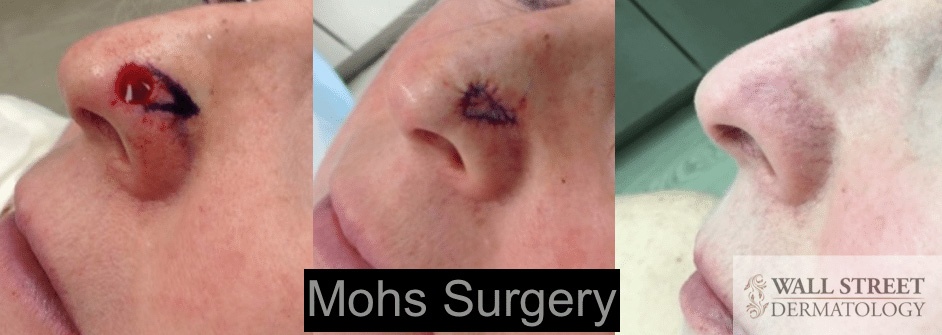
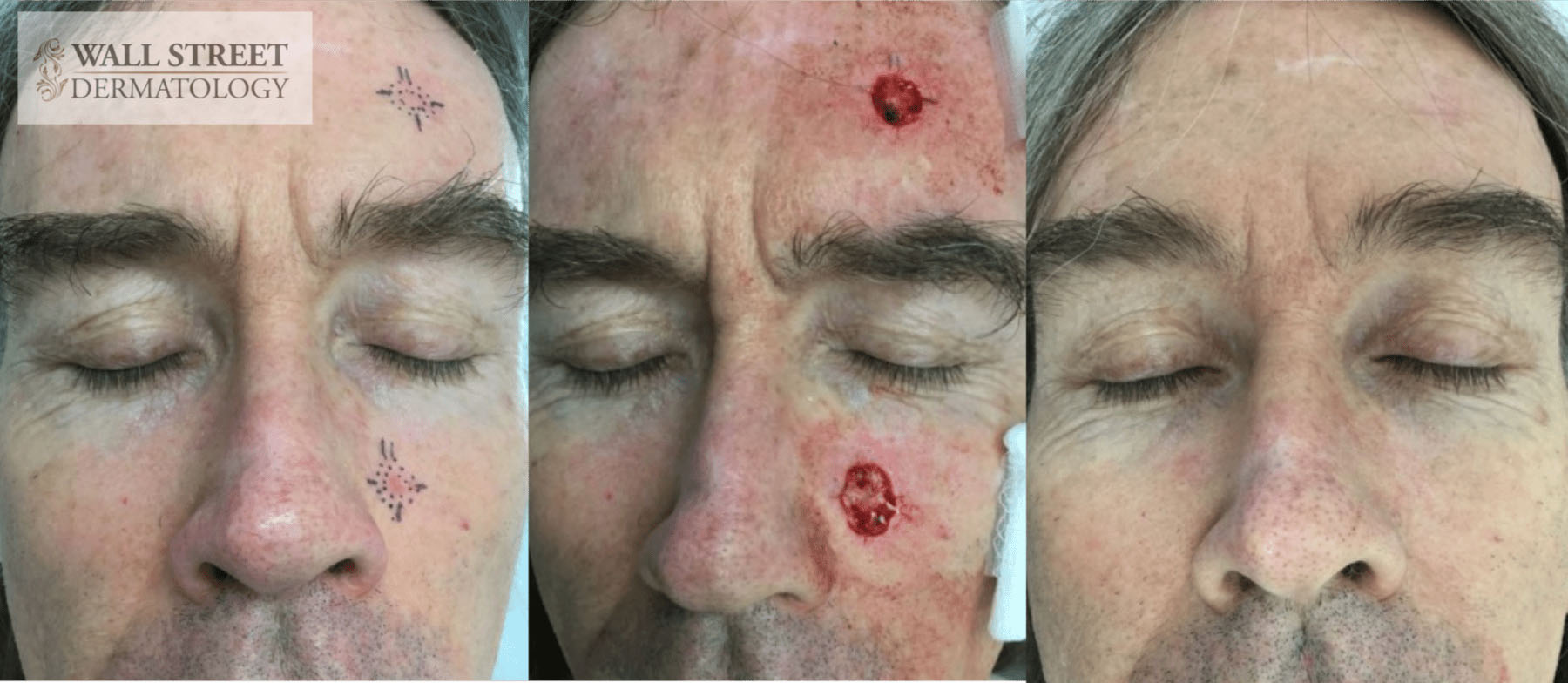
Our patients consistently achieve clear margins with minimal scarring. The gallery below demonstrates the precision and reconstructive expertise involved in preserving both healthy tissue and one’s natural appearance after Mohs surgery.
Below is a surgery involving the nose, and the post-surgery outcome after approximately 6 months.
Below is a surgery involving the forehead and cheek, and the post-surgery outcome also after approximately 6 months.
Your Mohs Surgery Reconstruction Options
After Mohs surgery, oncse the tumor has been completely removed, Dr. Julia Tzu carefully evaluates the best reconstruction method to restore both function and appearance. Depending on the size, depth, and location of the surgical site, several options may be considered:
- Secondary Intention Healing: The wound is allowed to heal naturally over time, ideal for small areas where the skin can regenerate smoothly on its own.
- Side-to-Side Stitches: The wound edges are gently brought together and sutured for a clean, minimal-scar closure.
- Skin Grafts and Flaps: When direct closure isn’t possible, Dr. Tzu may use nearby tissue or a small skin graft to achieve the most natural contour and color match.
- Referral to Specialized Surgeons: For rare cases requiring more complex reconstruction, Dr. Tzu collaborates with trusted facial plastic and oculoplastic surgeons to ensure the best possible aesthetic and functional result.
Every reconstruction plan is tailored to the individual, with Dr. Tzu’s goal always centered on achieving seamless healing and minimizing visible scarring after tumor removal.
What to Expect from Mohs Surgery
Mohs surgery is an outpatient procedure that removes skin cancer one layer at a time, examining each layer under a microscope until all cancer cells are gone. It offers the highest cure rate and preserves the healthiest tissue, ideal for visible or delicate areas.
Phase 1: Preparing for Surgery
- Review your medications with Dr. Tzu and your prescribing physician. You may be asked to pause certain non-prescription blood thinners, such as ibuprofen (Advil, Motrin), naproxen (Aleve), aspirin, or supplements like fish oil, vitamin E, ginkgo biloba, or garlic tablets about 10–14 days before surgery.
- Avoid alcohol for at least 48 hours before your procedure, as it can increase bleeding risk.
- Stop smoking if possible, since it slows healing and increases scarring.
- Eat a light meal the morning of surgery and wear comfortable, easy-to-remove clothing.
- Bring something to pass the time (a book, tablet, etc.), as the procedure and lab analysis can take several hours.
- Arrange a ride home if your surgery is near the eyes or may affect your ability to drive safely.
Phase 2: During the Procedure
- The area is numbed with local anesthesia.
- A thin layer of skin is removed, processed into slides, and examined for cancer cells.
- Layers are removed only where needed until margins are clear—usually within 1–3 stages.
- The process is precise, minimizing scarring and preserving healthy tissue.
Phase 3: After Cancer Removal & Reconstruction
- The wound is closed using the most appropriate method:
- Natural healing
- Side-by-side sutured closure
- Skin grafts or flaps
- Specialist referral, if needed
- Dr. Tzu will plan reconstruction based on the final wound size and location.
Recovery & Aftercare
- Most patients recover within 1 to 2 weeks, depending on the size and location of the surgical site.
- Expect mild swelling, bruising, or tenderness for the first few days, which can be managed with Tylenol and cold compresses.
- Follow Dr. Tzu’s detailed aftercare instructions for cleaning, bandage changes, and applying ointment to promote healing and minimize scarring.
- Avoid strenuous activity, bending, or heavy lifting for about two weeks to prevent bleeding or delayed healing.
- Contact Dr. Tzu’s office if you experience increased redness, pain, drainage, or swelling at the surgical site.
Meet Your Moh’s Surgeon – Dermatologist Dr. Julia Tzu
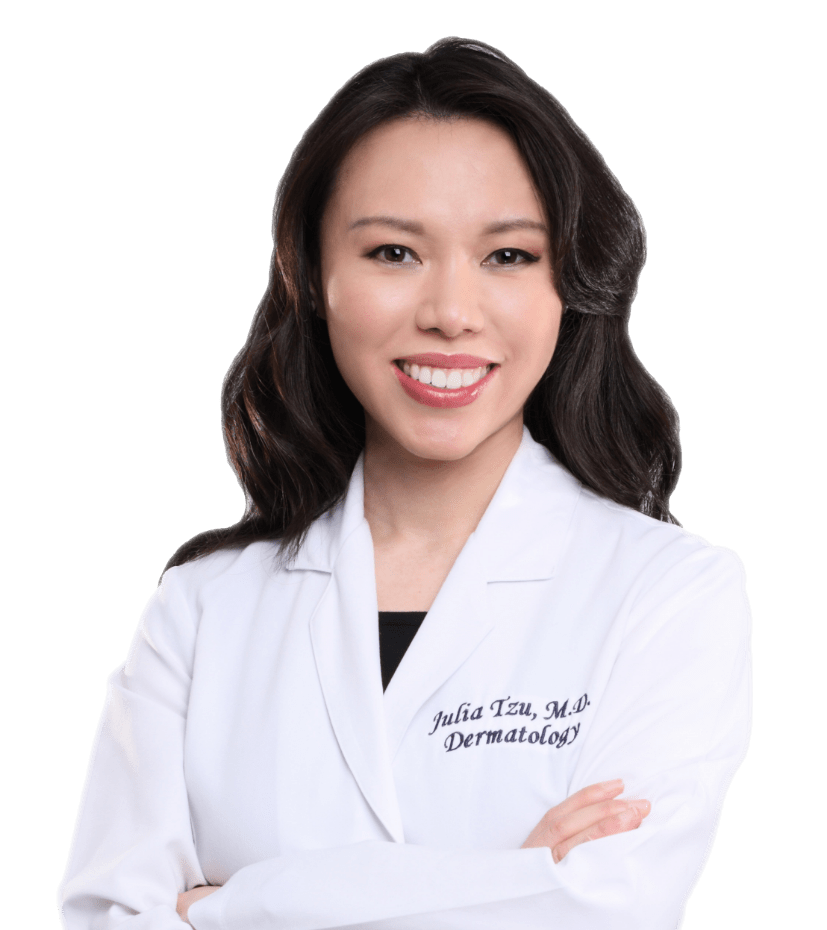
“People are often frightened by the idea of skin cancer surgery, because images of big, unsightly scars come to mind. However, my patients are usually pleasantly surprised by the inconspicuous nature of their post-surgical scars due to my precise surgical technique combined with the minimally invasive nature of Mohs surgery.” – Dr. Julia Tzu, MD, FAAD
Board Certified and Fellowship Trained in Mohs Surgery | Precise Surgical Techniques
Dr. Julia Tzu is a triple-board-certified dermatologist nationally recognized for her expertise in Mohs micrographic surgery and advanced skin reconstruction. She is known for her meticulous technique and artistic precision, achieving exceptional cure rates while minimizing scarring. As one of New York’s leading Mohs surgeons, Dr. Tzu has performed countless successful procedures, earning a reputation for results that restore both health and natural beauty.
Types of Skin Cancer Treated with Mohs Surgery
Mohs surgery is designed to precisely remove skin cancer tumors while preserving as much healthy tissue as possible. Dr. Julia Tzu uses this technique to treat both common and rare forms of skin cancer with exceptional accuracy.
Common tumors treated with Mohs surgery include:
- Basal Cell Carcinoma (BCC): The most common type of skin cancer, often appearing as a pearly bump or sore that doesn’t heal.
- Squamous Cell Carcinoma (SCC): The second most common type, typically presenting as a scaly patch, red bump, or ulcer.
- Rare Skin Cancers: Such as Microcystic Adnexal Carcinoma and Dermatofibrosarcoma Protuberans (DFSP), which may require Mohs for precise tumor margin control and optimal cosmetic outcomes.
By tailoring each treatment to the specific tumor type, Dr. Tzu ensures the highest cure rates with the most natural, refined results possible.
Mohs Surgery Cancer Prognosis
Mohs surgery has a 93-97% success rate when it comes to eradicating skin cancer. Excising and examining one layer of tissue at a time ensures complete cancer removal and dramatically decreases the chances of the skin cancer coming back.
Patients who opt for Mohs surgery also typically have a better psychological outcome because the procedure preserves their appearance as much as possible. Combined with the peace of mind from being cancer-free, Mohs surgery patients endure less stress than those undergoing other techniques.
Schedule a Mohs Surgery Consultation in NYC Today
Choosing Wall Street Dermatology for your Mohs surgery means choosing unmatched expertise, personalized care, and exceptional outcomes. Led by Dr. Julia Tzu, a triple board-certified dermatologist and one of the few in NYC with dual fellowship training in both Mohs surgery and dermatopathology, our practice offers a level of precision and cosmetic finesse that few others can match.
Don’t settle for less than the highest standard of care, book your Mohs surgery consultation with Dr. Tzu at Wall Street Dermatology today.
Mohs Surgery FAQ
Does Mohs surgery leave a scar?
All surgical procedures leave some form of scar, but Dr. Julia Tzu is renowned for her meticulous technique and aesthetic precision that minimizes the appearance of post-Mohs scars. She is also an specialist in scar revision and can help treat post Mohs scars with advanced techniques such as laser and microneedling.
As both a fellowship-trained Mohs surgeon and reconstructive dermatologist, she designs each closure to blend seamlessly with the surrounding skin, often making scars barely noticeable over time. Her combination of surgical artistry and advanced reconstruction methods helps patients heal with clear, natural-looking results.
Is Mohs surgery only done on the face?
Mohs surgery may be performed on several areas of the body to treat basal cell carcinoma, squamous cell carcinoma, and other types of skin cancers. Areas where Mohs surgery may be the best choice include:
- Near the eyes
- Nose or lips
- Ears or scalp
- Genitals
- Neck
- Hands and Feet
- Anywhere on the face
Can the Mohs surgery wound heal without stitches?
If the surgical wound is small enough, Mohs surgery can heal without stitches. However, most Mohs surgery wounds will require stitches or other techniques to help them close and heal properly.
How long is Mohs surgery and how long does recovery take?
Mohs surgery typically lasts half a day to a full day, depending on the size and depth of the tumor. The surgical removal itself usually takes only a few minutes per stage, while the tissue processing and microscopic analysis between stages account for most of the time.
Reconstruction of the surgical site generally takes about 30 minutes, depending on complexity. Most patients recover within 1 to 2 weeks, with minimal discomfort and a gradually improving appearance during the healing process.
Is Mohs surgery covered by insurance in NYC?
Yes — in most cases, Mohs surgery is covered by health insurance in NYC (and more broadly), because it’s considered a medically necessary procedure for treating certain skin cancers.
However, the extent of coverage depends on your specific plan — for example, whether the surgeon is in-network, whether prior authorization is required, and how deductibles, co-insurance, or copays apply.
Are there any alternatives to Mohs surgery?
Yes. Alternatives include standard surgical excision, curettage and electrodessication, cryotherapy, or topical treatments, depending on the tumor type, size, and location.
When is Mohs surgery not recommended?
Mohs may not be recommended for small, low-risk tumors on non-cosmetic areas or for certain types of melanoma better treated with wide local excision.
Are there any disadvantages to Mohs surgery?
The main drawbacks are the longer procedure time and higher cost compared to regular surgery. However, these are outweighed by its higher cure rate and tissue-sparing precision, leading to improved scarring.